
Sheboygan County Deed Types
Every deed records a conveyance. But the type of deed and the parties matter just as much. A warranty deed carries different promises than a quitclaim. The Sheboygan County Register of Deeds also records mortgages, releases, liens, easements, plats, certified survey maps, and probate instruments. Treat the index as a route to a document. It is never proof that no other interest exists.
| Deed Type | What It Does | Common Use |
|---|---|---|
| Warranty deed | Records a conveyance by the named grantor | Ordinary transfer research |
| Quitclaim deed | Records the interest conveyed by the signer | Family or interest cleanup |
| Personal representative deed | Shows a transfer made by an estate representative | Estate administration |
| Trustee deed | Records a conveyance made by a trustee | Trust-held property |
| Sheriff deed | Records a conveyance following a court process | Foreclosure trail |
A mortgage or lien is an encumbrance. It is not a deed transfer. A paid loan does not vanish from the public record on its own, so always pull the related release or satisfaction as a separate instrument before assuming the land is clear.
Sheboygan County Tapestry Index
The Register of Deeds links to Fidlar Tapestry EON along with a document-search tip sheet. The county's public page does not state a fixed online start year. It does not expose the full document-type menu either. So treat the online index as one access path. It is not proof that every historical Sheboygan County deed has been digitized. Record the document number and parties first. Then open the image. Tapestry is a transactional portal, and the county's fee schedule lists current copy costs. The counter and the copy-request form still matter in some cases. They matter when an image is missing. They also matter when a certified copy is required. The county's Tapestry EON search portal is the online deed index. Use it alongside, not instead of, the recorder's office.
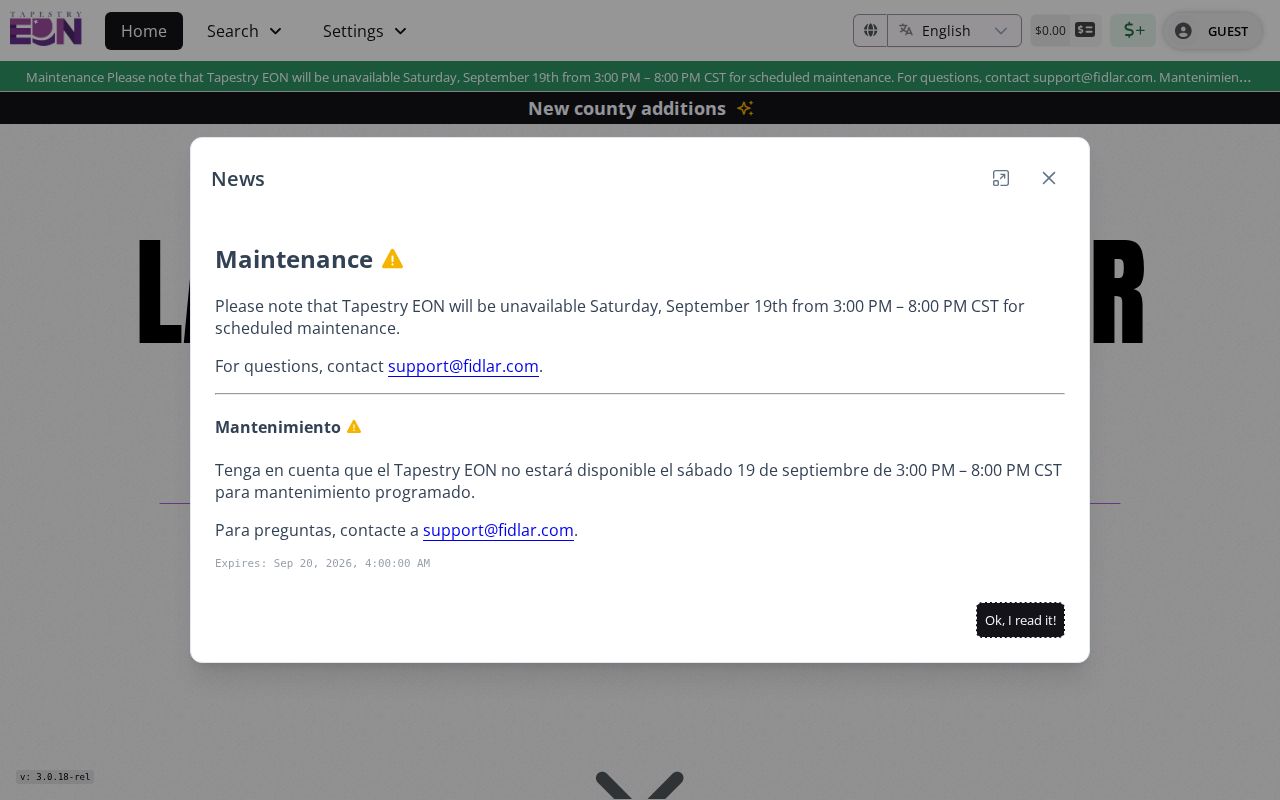
The index screen is where instrument research starts. Keep the reference details handy for any follow-up with the custodian.
Recording Fields in Sheboygan County
The county guide does not fix a set of Tapestry search boxes. For each match, capture the details that identify the filed instrument and the land it covers. Treat this field list as a checklist, not a claim about every column on screen.
| Parties | Grantor and grantee names as indexed |
|---|---|
| Instrument | Document type and instrument number |
| Date | Recording date and transaction date if shown |
| Location key | Parcel ID and legal description |
| Reference | Book/page or image reference when available |
Use the legal description to separate records for parcels that share a street address or an owner name.
Death Transfers in Sheboygan County
Not every transfer needs a purchase deed. A property can pass at death through other instruments. The Register of Deeds links material for a transfer by affidavit and for the TDI-110. The TDI-110 terminates a decedent's interest. The index may also show a personal representative deed, trustee deed, survivorship-related instrument, or court order. Search the decedent, the estate, the personal representative, and the successor owner. Then check WCCA for a related probate docket if the instrument cites court authority. A death certificate can support a filing, yet it conveys no real estate by itself. The recorded transfer and its legal description remain the land-record evidence.
Sheboygan County Grantor-Grantee Steps
The grantor-grantee chain verifies the direction of a transfer. The current owner of record appears as grantee on the acquisition deed. The grantor is the party conveying that interest. To work backward, find the grantor's own acquisition deed and repeat, keeping the legal description in view so a same-name record from another parcel never slips into the chain.
- Find the latest conveyance and confirm the parcel's legal description.
- Write down the grantee, grantor, recording date, and instrument number.
- Search the prior grantor as a grantee to locate the earlier acquisition.
- Repeat until the index ends, then ask the office about the volume chart and older books.
- Grantor
- The party named as conveying an interest in the instrument.
- Grantee
- The party named as receiving that interest.
- Chain of title
- The linked sequence of recorded transfers for a parcel.
- Book/page
- A volume reference; retain it with any instrument number or image reference.
Sheboygan County Mortgage Releases
Search a mortgage together with any assignment, satisfaction, or release. The mortgage identifies the financing. The later instrument records its discharge. The Register of Deeds also records federal tax liens, state and county tax liens, and mechanic's liens. Easements, restrictions, and correction instruments are recorded there too. For a court-enforced claim, add WCCA to the deed search. A lis pendens signals a pending case affecting land. The docket can show case events or a judgment. The public docket is only a summary. Request a filed judgment from the Clerk of Circuit Court when a certified record is required. The Wisconsin Circuit Court Access case-search page is the court-record route for a related docket.
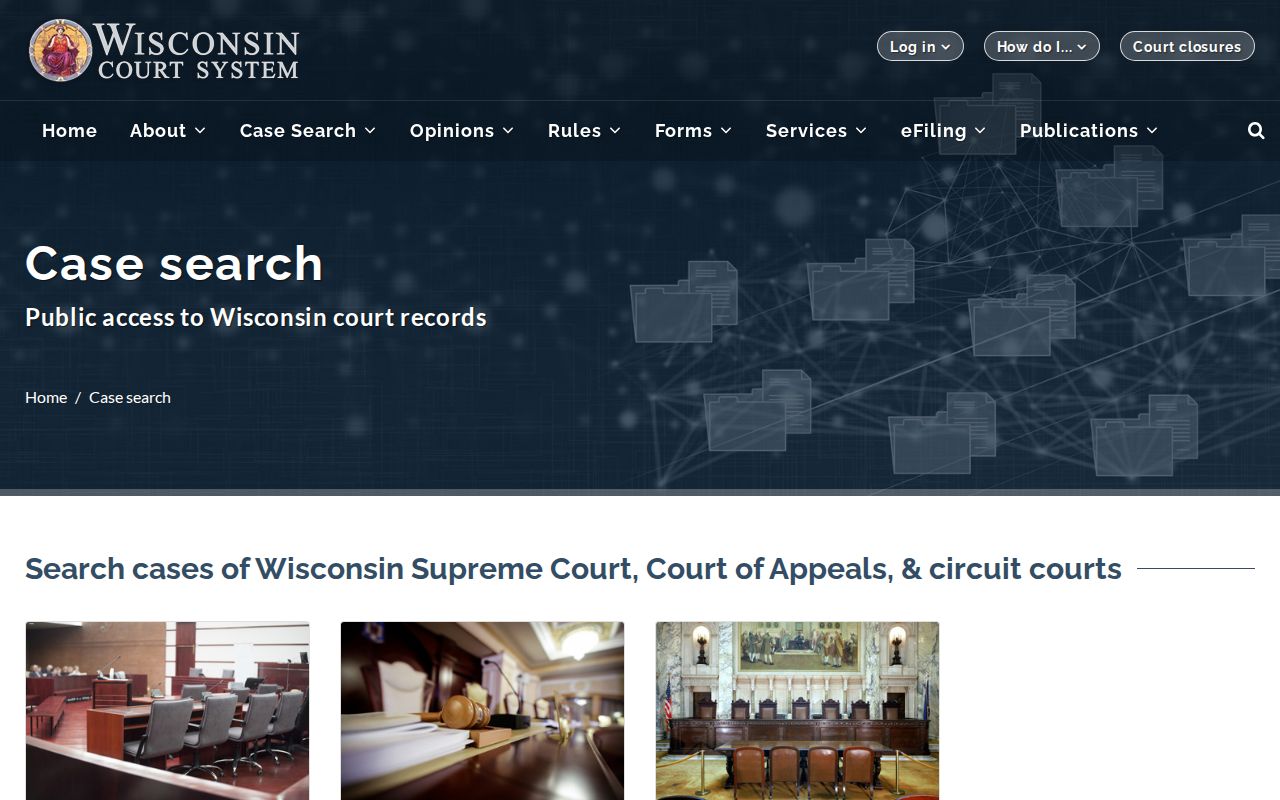
Use the docket to identify case events. When the document itself is needed, obtain the actual order or judgment from the Clerk of Circuit Court.
Older Sheboygan County Deed Books
The county publishes a chart showing when recording volumes and CSM volumes begin. The official page states no fixed online cutoff year. So use that chart and the Register of Deeds office to bridge any index gap. Give staff the approximate year, the municipality, the parties, the parcel, and the lot-and-block or metes-and-bounds description. FamilySearch's Wisconsin Wills and Deeds collection adds indexes and images from multiple custodians through about 2017. Image availability is uneven, though. Mead and SCHRC can supply directories and local context. A directory may link an old address to an occupant. Only the recorded instrument carries the deed chain. So let the property records settle the question.
Sheboygan County Plats and Survey Maps
Plats and certified survey maps are recorded land documents. They show how a lot was first laid out or later divided. Sheboygan County's GIS map displays subdivision and CSM layers. The Register of Deeds real-estate materials link the recorded map references. A CSM can explain a mismatch. It may show why a current parcel number or parcel shape differs from an older deed description.
Start with the county GIS map and find the layer label. Then use the map's document number or legal description to locate the filed instrument. Treat no drawn GIS line as a boundary survey. When the location on the ground matters, get the recorded map or a licensed survey.
A present parcel often came from an earlier tract. Keep both the current parcel number and the parent tract description in your search notes. A later CSM, subdivision plat, deed, and tax map may all use different labels for related land. The Register of Deeds' document number helps connect those property records. The map's lot or block reference does too. Together they link the documents without assuming the newest parcel outline has always existed.
Request a Sheboygan County Deed
For an online image, begin with Tapestry. For an older or hard-to-identify instrument, use the county's copy request form. You can also contact the Register of Deeds. The office sits at Administration Building, Room 218, 508 New York Avenue, Sheboygan, WI 53081. The office lists (920) 459-3023 and register.deeds@sheboygancounty.com. Include the parties, the recording date, and the document number or book/page. The parcel and its legal description belong in the request too.
The county fee schedule gives the current copying charges. Confirm the exact amounts before sending payment. Request a certified copy from the custodian rather than treating a download as certified.
Older books demand more of the search key. Give the parties' names, the approximate recording year, and the municipality. Add the parcel ID, lot and block or metes-and-bounds description. Include any volume or page clue too. A written request works best when it names the document type and date range. The county's volume-start chart helps staff aim the search at the right index run.
Decide what you actually need before requesting. An ordinary copy and a certified copy are different products. A portal index result, an online image, and a certified office copy are not interchangeable. Tie the fee and delivery instructions to your request date. Published charges and copy methods can change.
Recorded, not guaranteed. The index shows filed instruments and does not prove clear title. A title professional must examine the full chain and other interests.
Sheboygan County Deed Alerts
The Register of Deeds real-estate page links to Property Fraud Alert. It is a free signup for land-record activity notices. An alert is only a prompt to inspect a filing. It cannot stop a fraudulent document from being submitted, and it decides nothing about validity.
When an unexpected filing appears, note its instrument number. Contact the county Register of Deeds. Also contact any title insurer or lender involved. Earlier ownership questions belong on the Sheboygan County former-owner chain. The Property Fraud Alert signup page is the county-linked notification service.
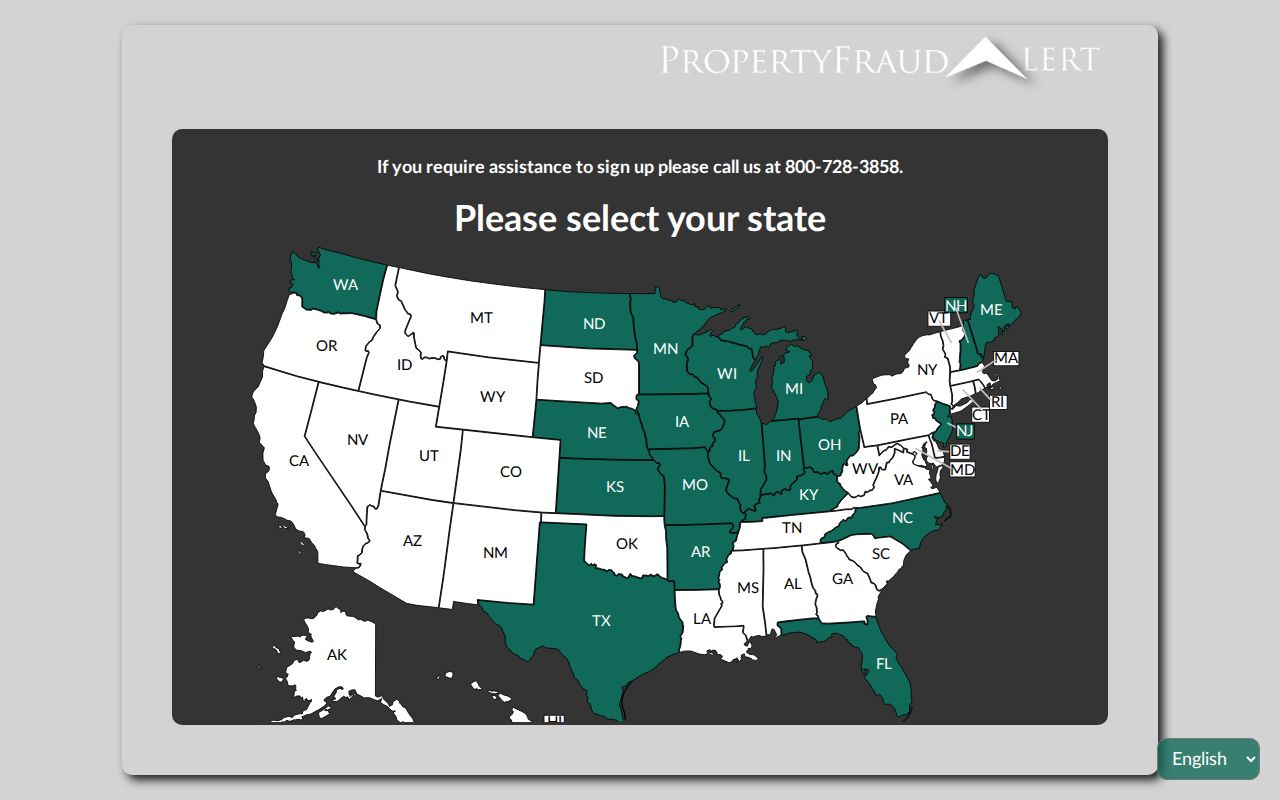
Note: Check any notice against the county's recorded instrument rather than an alert message alone.